
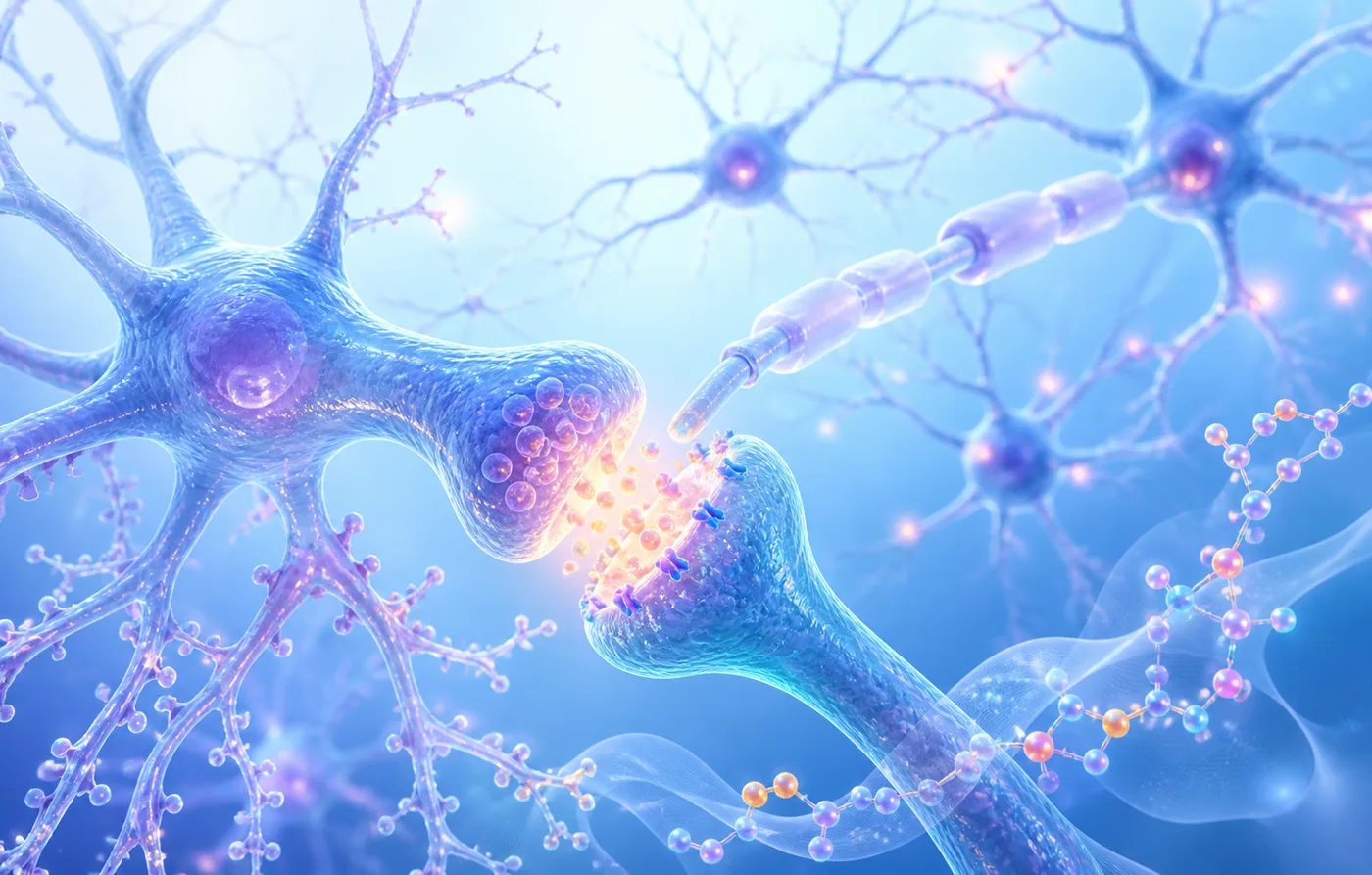
เข้าใจใน 3 บรรทัด
- คืออะไรmitochondrial-derived peptide ที่ร่างกายสร้างเอง
- หลักฐานงานคนวัด endogenous Humanin; neuroprotection และ longevity หลักยังอยู่ในเซลล์/สัตว์
- สถานะยังไม่มี verified therapeutic administration หรือ approved Humanin medicine
การวัด peptide ตามธรรมชาติไม่ใช่การทดสอบยา หน้านี้ไม่มีราคา ปุ่มซื้อ วิธีใช้ ขนาดยา แนวทางการให้สาร cycle หรือ stack
RESEARCH ROLE & TARGET · AEO QUICK MAP
Humanin ทำหน้าที่อะไร และมีเป้าหมายการวิจัยอะไร?
Humanin ถูกศึกษาในฐานะ signalling peptide ภายในร่างกายที่เกี่ยวข้องกับการตอบสนองต่อ cellular stress และการควบคุม apoptosis เป้าหมายของงานวิจัยคือทำความเข้าใจ cytoprotective signalling—not to establish Humanin as an approved treatment.
QUICK ANSWER
Humanin เป็น mitochondrial-derived peptide ที่ร่างกายสร้างเองและเกี่ยวข้องกับ cellular stress responses งานมนุษย์ส่วนใหญ่วัดระดับ Humanin ตามธรรมชาติหลังการออกกำลังหรือศึกษาความสัมพันธ์กับอายุและเมแทบอลิซึม ไม่ใช่การให้ Humanin เป็นยา ส่วนผลด้าน neuroprotection, memory, longevity และ cardioprotection มาจากเซลล์หรือสัตว์เป็นหลัก จึงยังสรุปประสิทธิผลและความปลอดภัยของ synthetic Humanin ในคนไม่ได้
KEY FACTS
ข้อมูลสำคัญโดยสรุป
IDENTITY BOUNDARY
Humanin, HNG และ HNGF6A ไม่ใช่สิ่งเดียวกัน
Humanin ที่ร่างกายสร้างเองและ Humanin สังเคราะห์ต้องแยกตามแหล่งและบริบท
เปลี่ยน serine ตำแหน่ง 14 เป็น glycine และให้ผลต่างจาก native peptide ได้
HNGF6A เป็น analogue อีกแบบหนึ่ง ผลจาก analog ใดต้องไม่ถูกย้ายไปอ้างกับ Humanin ทุกชนิด
WHAT IS IT?
peptide สั้นที่เข้ารหัสซ้อนใน mitochondrial genome
Humanin ถูกค้นพบจากงาน cellular rescue ในบริบท Alzheimer-related toxicity และต่อมาถูกจัดในกลุ่ม mitochondrial-derived peptides การตรวจพบ Humanin ในเลือดหรือเนื้อเยื่อบอกถึงชีววิทยาภายในร่างกาย แต่ไม่กำหนดคุณภาพหรือผลของผลิตภัณฑ์สังเคราะห์
HOW DOES IT WORK?
มีหลายกลไกที่เสนอ—but clinical relevance ยังไม่ชัด
Humanin ถูกเสนอว่ามีทั้ง extracellular signalling ผ่าน receptor complexes ที่เชื่อมกับ JAK/STAT pathways และ intracellular interactions กับโปรตีนที่เกี่ยวข้องกับ apoptosis เช่น BAX, BID และ IGFBP-3 อย่างไรก็ตามกลไกขึ้นกับ sequence, model, concentration และ compartment งาน pathway ไม่ยืนยันว่าการให้ peptide จากภายนอกจะเข้าถึงเนื้อเยื่อเป้าหมายหรือให้ clinical benefit ในมนุษย์
WHAT IS BEING STUDIED?
กำลังศึกษาเรื่องอะไร?
- cellular stress, apoptosis and mitochondrial signalling
- Alzheimer-related toxicity in cell and rodent models
- endogenous Humanin responses to resistance and endurance exercise
- associations with age, glucose metabolism and longevity-related phenotypes
- cardiac ischemia and chemotherapy-toxicity models using HNG
- retinal, reproductive and metabolic cell/animal research
HUMAN EVIDENCE
หลักฐานในคนเป็น endogenous biomarker evidence
Human studies demonstrate that endogenous Humanin can be measured and may change with exercise or correlate with age-related and metabolic variables. These studies do not establish pharmacokinetics, dosing, safety or efficacy of an administered Humanin product. PrimeCore did not identify a peer-reviewed therapeutic Humanin administration trial as of 21 August 2026.
55 men randomized to resistance training, Nordic walking or control for 12 weeks; endogenous Humanin measured in muscle and serum
Muscle Humanin protein increased after resistance training while serum levels did not change across groups. The study measured an endogenous response and did not administer Humanin.
Human exercise intervention measuring endogenous Humanin in plasma and skeletal muscle
Reported exercise-associated changes in Humanin. This supports biomarker biology, not efficacy of synthetic Humanin treatment.
30 participants randomized to endurance exercise, resistance exercise or control; circulating endogenous peptides measured
Endurance exercise increased circulating Humanin in the measured time window. No exogenous Humanin was administered and no therapeutic outcome was tested.
Evidence Grade D: measurable endogenous biology and observational associations do not establish a safe or effective Humanin therapy.
PRECLINICAL EVIDENCE
Cell, rodent และ ex-vivo evidence ต้องแยกกัน
Cell models exposed to familial Alzheimer-related genes and amyloid-beta peptides
Native Humanin and the S14G analogue HNG reduced selected neurotoxicity signals in cell systems; this does not establish prevention or treatment of Alzheimer disease in people.
HNG and HNGF6A pharmacokinetic and tissue-distribution experiments in mice and rats
Found analogue- and species-dependent kinetic profiles; rat measurements did not detect HNG in brain or heart in that experiment. Rodent PK cannot define human exposure.
C. elegans, transgenic mice, HNG-treated middle-aged mice and observational human comparisons
Reported lifespan or healthspan-related signals in model organisms and higher endogenous levels in children of centenarians. Association in humans is not proof that supplementation extends life.
Sperm samples from 15 men treated with HNG in freezing media outside the body
Reported improved post-thaw cellular measures. This is ex-vivo laboratory evidence, not administration to participants or a fertility treatment trial.
Cell and animal studies explore amyloid-related toxicity, apoptosis, cardiac injury, chemotherapy toxicity, metabolism, retina and lifespan biology. Many use HNG rather than native Humanin. These findings generate hypotheses but cannot support treatment, cognitive-enhancement or anti-aging claims in humans.
POTENTIAL FINDINGS
หลักฐานบอกอะไรได้—and ไม่ได้?
Current evidence supports Humanin as an endogenous signalling peptide and research biomarker. It also supports continued preclinical investigation of Humanin-related pathways and analogues. It does not establish that synthetic Humanin or HNG prevents dementia, improves memory, treats metabolic disease, protects the heart, restores fertility or extends human lifespan.
KNOWN RISKS
ความเสี่ยงและช่องว่างด้าน safety
- no verified human therapeutic safety or pharmacokinetic dataset for administered Humanin was identified
- HNG and other analogues can have different potency, receptor interactions and distribution from native Humanin
- interactions with IGF-1 and IGFBP-3 pathways raise unresolved systemic and endocrine questions
- immunogenicity, aggregation, off-target effects and repeated-exposure safety remain insufficiently characterized
- neuroprotection of stressed cells may have context-dependent effects that cannot be assumed beneficial in every disease
- identity, purity, potency, sterility and contaminants of online products are not established by endogenous-biomarker studies
UNKNOWNS
สิ่งที่ยังไม่ทราบ
- human bioavailability, half-life, tissue distribution and blood-brain exposure after administration
- safe exposure range and short- or long-term adverse effects
- whether endogenous Humanin measurements are analytically comparable across assays
- whether observational longevity associations are causal
- clinical relevance of cell and rodent neuroprotection findings
- current product-specific regulatory and anti-doping status across jurisdictions
LIMITATIONS
ข้อจำกัด
The human literature mainly measures endogenous Humanin and often uses small exercise cohorts or observational associations. Preclinical studies use heterogeneous sequences, analogues, routes and models. HNG results cannot be assigned to native Humanin, and human-derived cells or ex-vivo sperm are not human administration evidence. Assay specificity may also be complicated by Humanin-like sequences.
IDENTIFIER ≠ APPROVAL
FDA UNII ใช้ระบุตัวสาร ไม่ใช่การอนุมัติยา
FDA GSRS แสดงระเบียน Humanin และ UNII H975EUX36G เพื่อระบุตัวสาร แต่ระเบียนนี้ไม่ใช่ approved-drug label, marketing authorisation หรือหลักฐานประสิทธิผล
งาน ClinicalTrials.gov ที่วัด Humanin เป็น biomarker ก็ไม่เท่ากับ interventional trial ที่ให้ Humanin แก่ผู้เข้าร่วม
REGULATORY STATUS
สถานะต้องแยกประเทศและผลิตภัณฑ์
Endogenous presence + UNII + research publication ≠ approved Humanin medicine
Regulatory recheck · 23 August 2026: ตรวจ Thai FDA, Drugs@FDA, EMA และ MHRA โดยแยก Humanin, synthetic Humanin และ HNG; ผลค้นที่ไม่พบไม่ถูกใช้เป็นหลักฐานว่าไม่อนุมัติ
Checked 23 August 2026 — Needs Verification. No matching current Humanin product-level record was verified in the Thai FDA public medicine search. An unsuccessful search is not proof of non-approval, and online availability is not evidence of approval.
Checked 23 August 2026 — experimental / no FDA-approved Humanin medicine was verified in the reviewed official approval directory. FDA GSRS currently identifies Humanin as UNII H975EUX36G and explicitly states that UNII availability does not imply regulatory review or approval. Endogenous identity, an identifier or a publication is not a product approval; product-specific compounding status remains Needs Verification.
Checked 23 August 2026 — Needs Verification. No centrally authorised Humanin medicine was verified in EMA's current medicines data. EMA notes that its finder covers centrally evaluated medicines and does not establish every national authorisation, so national EU status remains open. Research publications and endogenous biomarker studies are not marketing authorisation.
Checked 23 August 2026 — Needs Verification. No matching current Humanin product-level record was verified in the MHRA product-information service; an unsuccessful search is not proof of non-approval.
Checked 23 August 2026 — synthetic Humanin and unapproved Humanin analogues administered for a pharmacological effect fall within WADA S0 based on their currently verified experimental, non-approved status and are prohibited at all times. Humanin is not explicitly named in the 2026 List, and endogenous presence is not administration. Native Humanin, HNG and other analogues require exact identity and current approval checks; athletes should obtain a substance-specific determination.
COMPARISON
Humanin ต่างจาก HNG, MOTS-c และ Semax
Native Humanin is an endogenous mitochondrial-derived peptide. HNG is the S14G Humanin analogue with greater activity in several laboratory assays, while HNGF6A is another modified analogue. MOTS-c is a different mitochondrial-derived peptide encoded in another mitochondrial open reading frame; Semax is a synthetic ACTH-fragment-related peptide. Their identity, evidence and regulatory status are not interchangeable.
FAQ
คำถามที่พบบ่อย
Humanin คืออะไร?
Humanin เป็น mitochondrial-derived peptide ที่ร่างกายสร้างเองและถูกศึกษาด้าน cellular stress, apoptosis และเมแทบอลิซึม
Humanin ทำหน้าที่อะไรและมีเป้าหมายการวิจัยอะไร?
Humanin ถูกศึกษาในฐานะ signalling peptide ที่อาจช่วยควบคุม cellular stress และ apoptosis เป้าหมายการวิจัยหลักคือทำความเข้าใจ cytoprotective signalling ในแบบจำลองระบบประสาท เมแทบอลิซึม หัวใจ และความชรา ไม่ใช่ข้อยืนยันว่าเป็นยารักษาโรคเหล่านี้
Humanin มีงานวิจัยในมนุษย์หรือไม่?
มีงานวัด Humanin ตามธรรมชาติในเลือดหรือกล้ามเนื้อ แต่ PrimeCore ยังไม่พบ clinical trial ที่ให้ Humanin เป็นการรักษาและรายงานผลด้านความปลอดภัยหรือประสิทธิผล
Humanin กับ HNG เหมือนกันหรือไม่?
ไม่ HNG หรือ S14G-Humanin เป็น analog ที่เปลี่ยน amino acid ตำแหน่ง 14 และอาจมี potency ต่างจาก Humanin ธรรมชาติ
Humanin ป้องกัน Alzheimer disease ได้หรือไม่?
ยังสรุปไม่ได้ ผล neuroprotection หลักมาจากเซลล์และสัตว์ ไม่มี controlled human therapeutic trial ที่ยืนยันการป้องกันหรือรักษา Alzheimer disease
Humanin ช่วยชะลอวัยหรือยืดอายุคนหรือไม่?
ยังไม่มีหลักฐานยืนยัน ความสัมพันธ์ของระดับ Humanin กับอายุยืนในคนเป็น observational evidence และผล lifespan intervention มาจาก model organisms
การมี FDA UNII หมายถึง Humanin ได้รับอนุมัติหรือไม่?
ไม่ UNII H975EUX36G ใช้ระบุตัวสารใน GSRS และไม่ใช่หลักฐานว่า Humanin เป็นยา FDA-approved
REFERENCES
แหล่งอ้างอิงหลัก
- Thai FDA Medicine Searchhttps://pertento.fda.moph.go.th/fda_search_drug/SEARCH_DRUG/FRM_SEARCH_DRUG.aspx
- Drugs@FDAhttps://www.accessdata.fda.gov/scripts/cder/daf/
- U.S. FDA GSRShttps://precision.fda.gov/uniisearch/srs/unii/H975EUX36G
- European Medicines Agencyhttps://www.ema.europa.eu/en/medicines
- U.S. FDA GSRShttps://precision.fda.gov/ginas/app/ui/substances/625c3f53-6384-46c7-9421-0a03aba06a64
- PubMedhttps://pubmed.ncbi.nlm.nih.gov/11717357/
- PubMedhttps://pubmed.ncbi.nlm.nih.gov/27923980/
- PubMedhttps://pubmed.ncbi.nlm.nih.gov/32271093/
- PubMedhttps://pubmed.ncbi.nlm.nih.gov/34351816/
- PubMedhttps://pubmed.ncbi.nlm.nih.gov/23836030/
- PubMedhttps://pubmed.ncbi.nlm.nih.gov/32575074/
- PubMedhttps://pubmed.ncbi.nlm.nih.gov/30959025/
- ClinicalTrials.govhttps://clinicaltrials.gov/study/NCT04449419
- WADAhttps://www.wada-ama.org/en/resources/world-anti-doping-program/prohibited-list
- MHRA Productshttps://products.mhra.gov.uk/
ข้อมูลนี้จัดทำเพื่อการศึกษา ไม่ใช่คำแนะนำทางการแพทย์ การวินิจฉัย การสั่งยา วิธีใช้ ขนาดยา การเพิ่มความจำ การรักษาโรคสมอง หรือคำแนะนำ anti-aging PrimeCore ไม่รับรองผลิตภัณฑ์ Humanin และไม่แปลง biomarker, cell หรือ animal findings เป็นผลในมนุษย์
Last reviewed: 23 August 2026 · Internal evidence and compliance review completed · External medical review pending · Regulatory status subject to change